What Is Stress? A Scientific Perspective
Transforming stress through art & awareness

Stress is not just a feeling — it is a primal biological response, designed to help humans survive.
This concept was systematized by Hans Selye (1956), who defined:
"Stress is the non-specific response of the body to any demand placed upon it."
— Hans Selye (1956)
What is important in Hans Selye's work is that stress is not entirely negative. He distinguished:
A positive form of stress that helps us adapt and grow
A prolonged form of stress that damages the body and mind
At the neuroendocrine level, research by Robert Sapolsky has shown:
Stress activates the HPA axis (Hypothalamic–Pituitary–Adrenal).
It increases the hormone cortisol.
When prolonged, it can impair the function of the hippocampus — the region associated with memory and learning.
Therefore, the question is not whether we have stress or not, but how we are living with stress.

✿ Stress in the Digital Media Age
If in the past, stress came from physical danger, today it comes from the never-ending flow of information.
Nobel laureate Herbert A. Simon once warned:
A wealth of information creates a poverty of attention.
— Herbert A. Simon
This statement has never been more true than in the age of social media.
Research by Clifford Nass has shown: the more people media-multitask → the more their ability to focus decreases. The brain is placed in a state of continuous "semi-stress."
Reports from the World Health Organization have also noted: anxiety and depression are rising globally. Part of the cause comes from information overload and social comparison.
Modern humans are not just tired — they are silently overwhelming their nervous systems.
✿ When Science Meets Art Therapy
In this context, one approach gaining scientific attention is art therapy.
Research by Girija Kaimal (2016) showed: just 45 minutes of creative activity can significantly reduce cortisol.

Girija Kaimal — Research on the impact of creative activity on cortisol
This is not a coincidence. According to Stephen W. Porges: when humans feel safe, the parasympathetic nervous system is activated. Art is one of the pathways to creating this state of safety.
When you paint, write, sing, move… you are not just "expressing" — you are restoring your biological equilibrium.
✿ The "Flow" State — Where Stress Dissolves
Psychologist Mihaly Csikszentmihalyi called the deep creative state "flow." It is a state where:
The mind is completely present
The noise of anxiety fades away
The pressure of time no longer exists
In this state: brain activity related to anxiety decreases, while creativity and performance increase.
Flow is not "escaping from life" — it is returning to the most natural state of being human.
✿ Awareness: The Foundation of Transformation
If art is the door, then awareness is the key.
Professor Jon Kabat-Zinn defines mindfulness as:
"Paying attention in a particular way: on purpose, in the present moment, and non-judgmentally."
— Jon Kabat-Zinn
Research from Harvard Medical School has shown: reduced activity in the amygdala (the fear center), and increased capacity for emotional regulation.
Awareness helps you: not get swept away by thoughts, not identify yourself with emotions.
And it is right here that transformation begins. When stress is no longer suppressed but transformed into life energy and creativity.
✿ The Guide: Master Oneness
In this journey, the guide is not someone who "tells you what to do" — but someone who holds the space for you to experience yourself.

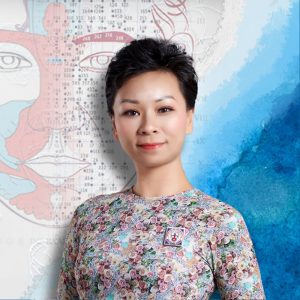
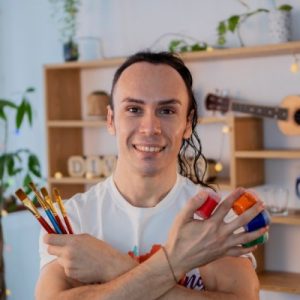
Master Oneness is the one leading the webinar, with an approach that integrates: awareness, expressive art, and understanding of the mechanisms of the mind.
But the difference is not just understanding — it is experiencing directly in each moment.
Experience at the Webinar
This is not a theoretical lecture. This is a space for practice, where you can:
Feel how your body is carrying stress.
Express without being judged.
Experience the flow state right within the session.
Because transformation does not happen when you read — it happens when you experience.
✿ Event Details
| Event | TRANSFORMINGART – WEBINAR 01 Unlock the Creative Flow |
| Theme | Transforming stress through art & awareness |
| Date & Time | Saturday, April 25, 2026 | 7:00 PM – 8:30 PM (GMT+7) |
| Format | Online via Zoom |
| Language | English |
| Facilitator | Master Oneness |

Stress is not something to eliminate.
It is a signal. An energy. A calling.
When you: understand it through science, touch it through art, observe it through awareness —
Stress is no longer a burden but becomes a doorway into creativity, healing, and inner freedom.
References
Selye, H. (1956). The stress of life. McGraw-Hill.
Sapolsky, R. M. (2004). Why zebras don't get ulcers (3rd ed.). Holt.
Simon, H. A. (1971). Designing organizations for an information-rich world.
Ophir, E., Nass, C., & Wagner, A. D. (2009). Cognitive control in media multitaskers. PNAS, 106(37), 15583–15587.
Kaimal, G., Ray, K., & Muniz, J. (2016). Reduction of cortisol levels following art making. Art Therapy, 33(2), 74–80.
Porges, S. W. (2011). The polyvagal theory. Norton.
Csikszentmihalyi, M. (1990). Flow. Harper & Row.
Kabat-Zinn, J. (1990). Full catastrophe living.
Hölzel, B. K., et al. (2011). Mindfulness and brain structure. Psychiatry Research, 191(1), 36–43.
Siegel, D. J. (2012). The developing mind. Guilford Press.
World Health Organization. (2022). Mental health report.
Ready for the Journey of Transformation?
Register now to experience a space of stress transformation through art & awareness with Master Oneness.
REGISTER NOW →