Sustainable Leadership Begins Within
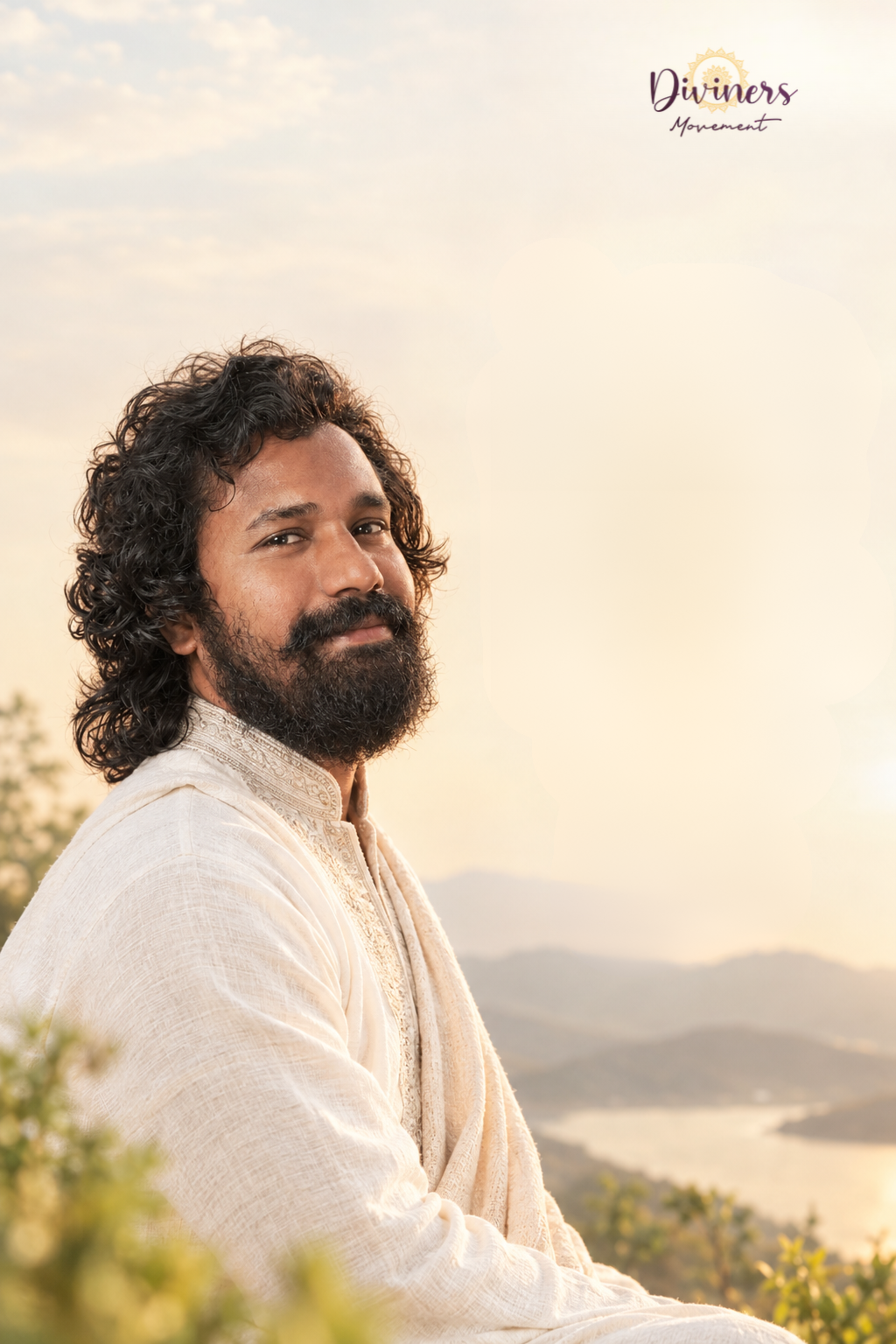
For the third time, Master Oneness was invited to Van Lang University, where He shared a profound perspective on leadership with 150 students: before leading others, we must learn to observe, understand, and master ourselves.
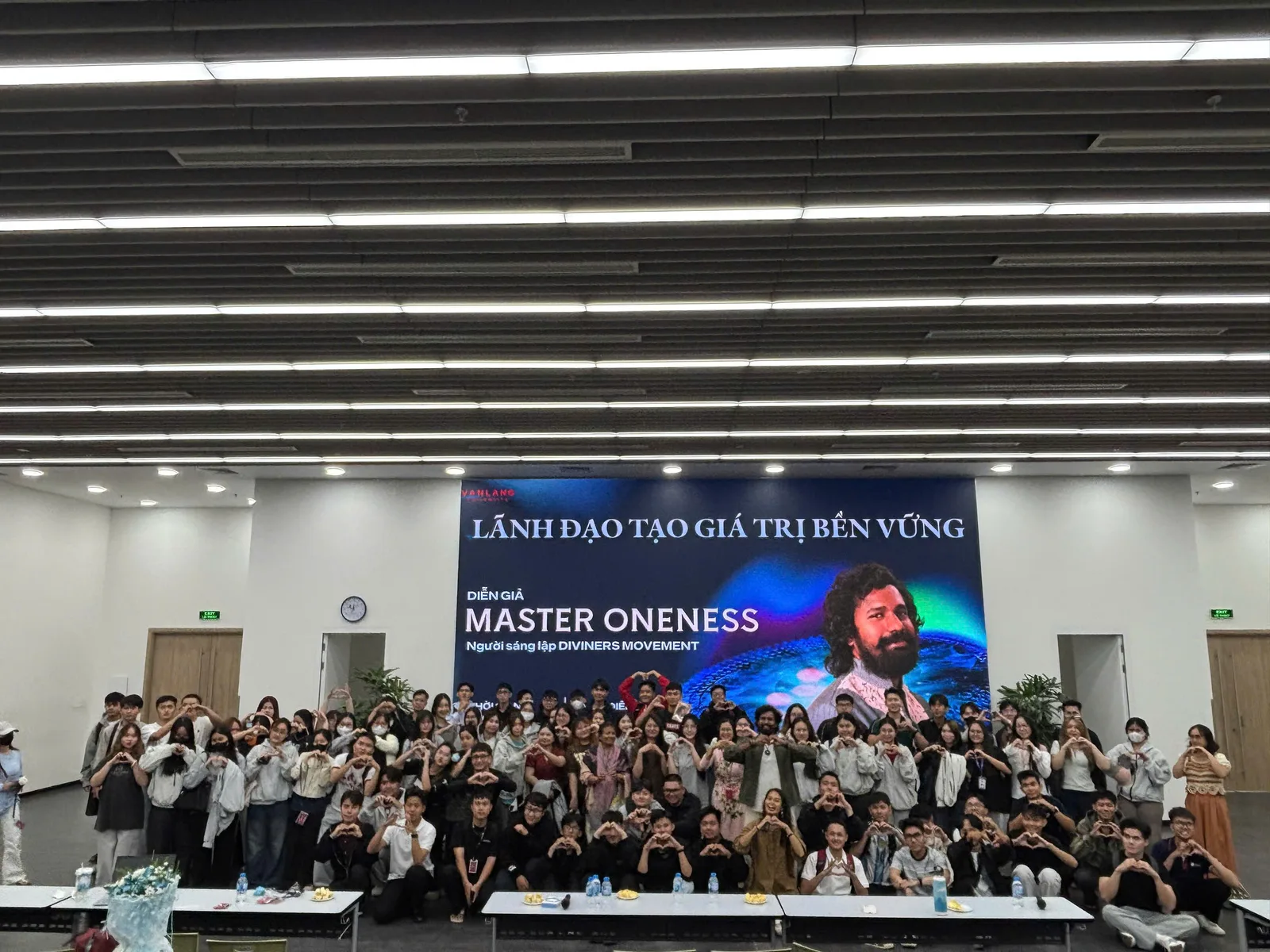
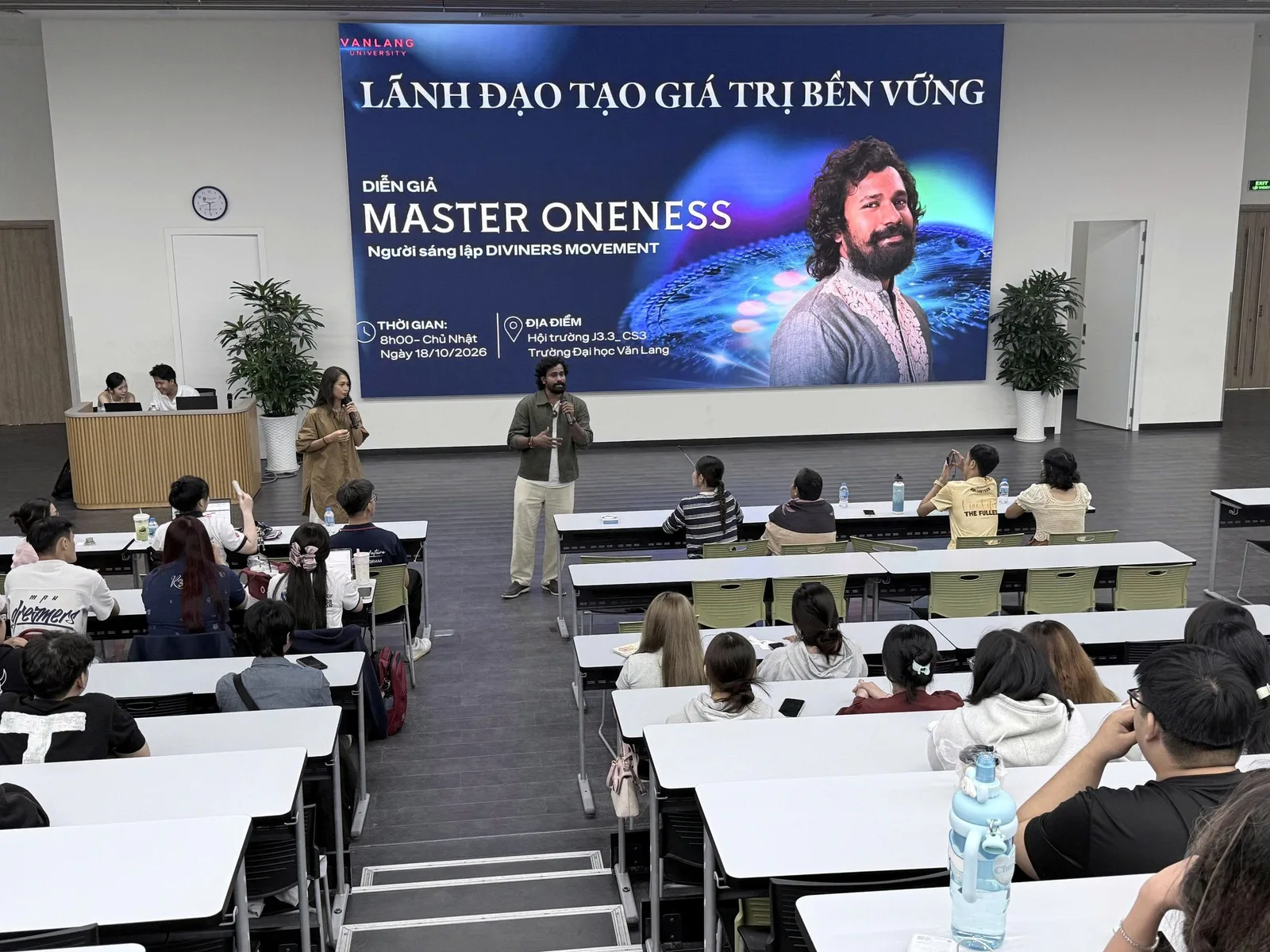
On October 18, Master Oneness delivered a sharing session for third- and fourth-year students at Van Lang University on the theme “Conscious Leadership for Sustainable Value Creation.” This marked the third time He had been invited back by the University, continuing to create a space for learning and experiential exploration for students on their journey of personal development, leadership cultivation, and the pursuit of sustainable values.
Rather than approaching leadership solely through concepts of management, achievement, or executive capability, the session invited participants to return to a more fundamental question: What truly makes a sustainable leader?
✿ Sustainable Leadership Begins Within, Not with a Position
From the perspective shared by Master Oneness, sustainability does not come solely from external power, wealth, or status. Instead, it is built upon and nurtured through each person's inner foundation.
A person may achieve great success and hold important positions, yet still feel exhausted and depleted if they are constantly driven by fear, judgment, inner conflict, or the need to prove themselves.
Master Oneness emphasized that what we give to our families, communities, and the world is deeply connected to what we carry within ourselves. To create sustainable value, each person must begin by recognizing and nurturing this inner foundation.
This also offers an important reflection for young people preparing to enter the workforce: alongside acquiring professional knowledge and career skills, it is equally important to develop self-understanding, manage one's energy, and respond proactively to life's challenges.
✿ Metacognition: Learning to Observe Ourselves
One of the key topics of the session was metacognition — the ability to recognize and observe our own thoughts, emotions, and behavioral patterns rather than immediately being carried away by them.
When criticized, we often react defensively, become angry, or hold on to emotional pain. When facing failure, we may repeatedly engage in negative thinking without realizing how it affects our self-perception and decision-making.
Master Oneness encouraged participants to take a step back and observe: What is happening within me? Why am I reacting this way? Is this habit helping me, or is it limiting me?
He used the image of a line drawn on water to illustrate the ability to let go. An experience does not necessarily have to become a lasting wound if we recognize it and choose not to keep feeding it.
Like a domino effect, small thoughts and habits, when left unrecognized, can build upon one another and lead to much greater consequences. Learning to observe ourselves therefore not only helps us understand ourselves more deeply, but also creates the opportunity to respond consciously rather than react automatically.
✿ The Breath — A Natural Resource Always Available to Us
Alongside observing the mind, breathing was introduced as a simple practice for bringing our attention back to the present moment.
In modern life, young people are constantly processing information, meeting deadlines, and adapting to various expectations. In the midst of this pace, moments of stillness are easily overlooked.
Master Oneness guided participants through diaphragmatic breathing, combining awareness of the breath with physical relaxation. He suggested practicing 21 deep abdominal breaths whenever they feel stressed or tired, as well as spending 5–10 minutes each day sitting quietly and observing what is happening within.
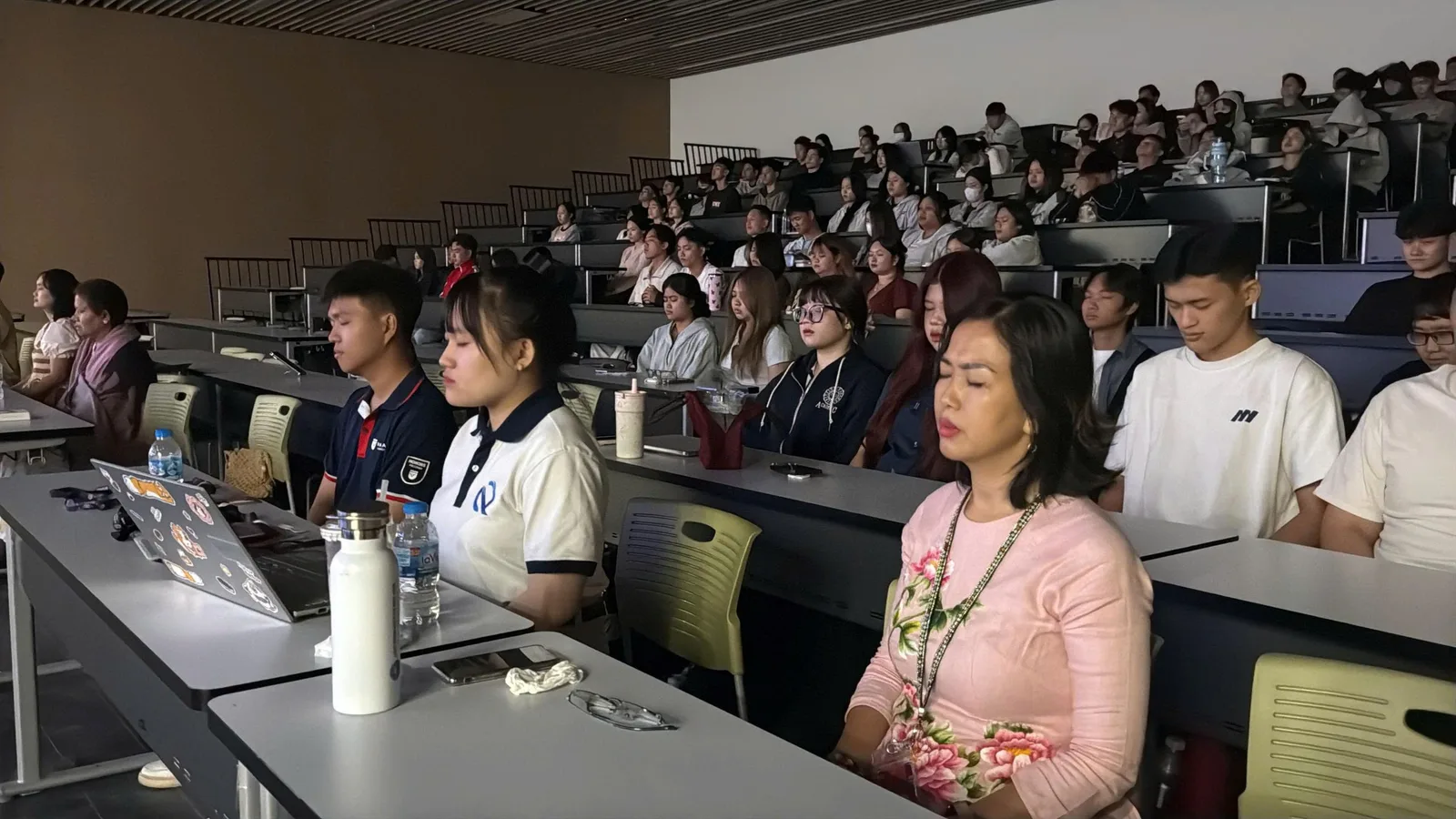
These practices require neither special equipment nor particular conditions. What matters is consistency and the ability to return to ourselves amid everyday activities.
He also encouraged students to limit their use of electronic devices during the hour before bedtime and immediately after waking up, creating more space for the mind to rest rather than being immediately drawn into the constant stream of external information.
In this way, self-care can become less of a task to complete and more of a natural part of a conscious lifestyle.
✿ From Awareness to Action: Three Qualities to Cultivate
To help participants bring their learning into everyday life, Master Oneness emphasized three essential qualities: Commitment, Involvement, and Patience.
Understanding becomes truly meaningful when it is translated into experience and action. A new habit does not take shape through a single practice; change must be nurtured through small, consistent, and conscious choices.
For students approaching graduation, these qualities can serve them as they enter the professional world, work in teams, resolve conflicts, and take on leadership responsibilities.
As reflected in the session, sustainable leadership is not merely the ability to guide a team toward its goals. It is also a journey of learning to take responsibility for oneself, understand the impact of one's choices, and create positive value for others.
✿ From Initial Hesitation to Immersion in the Experience
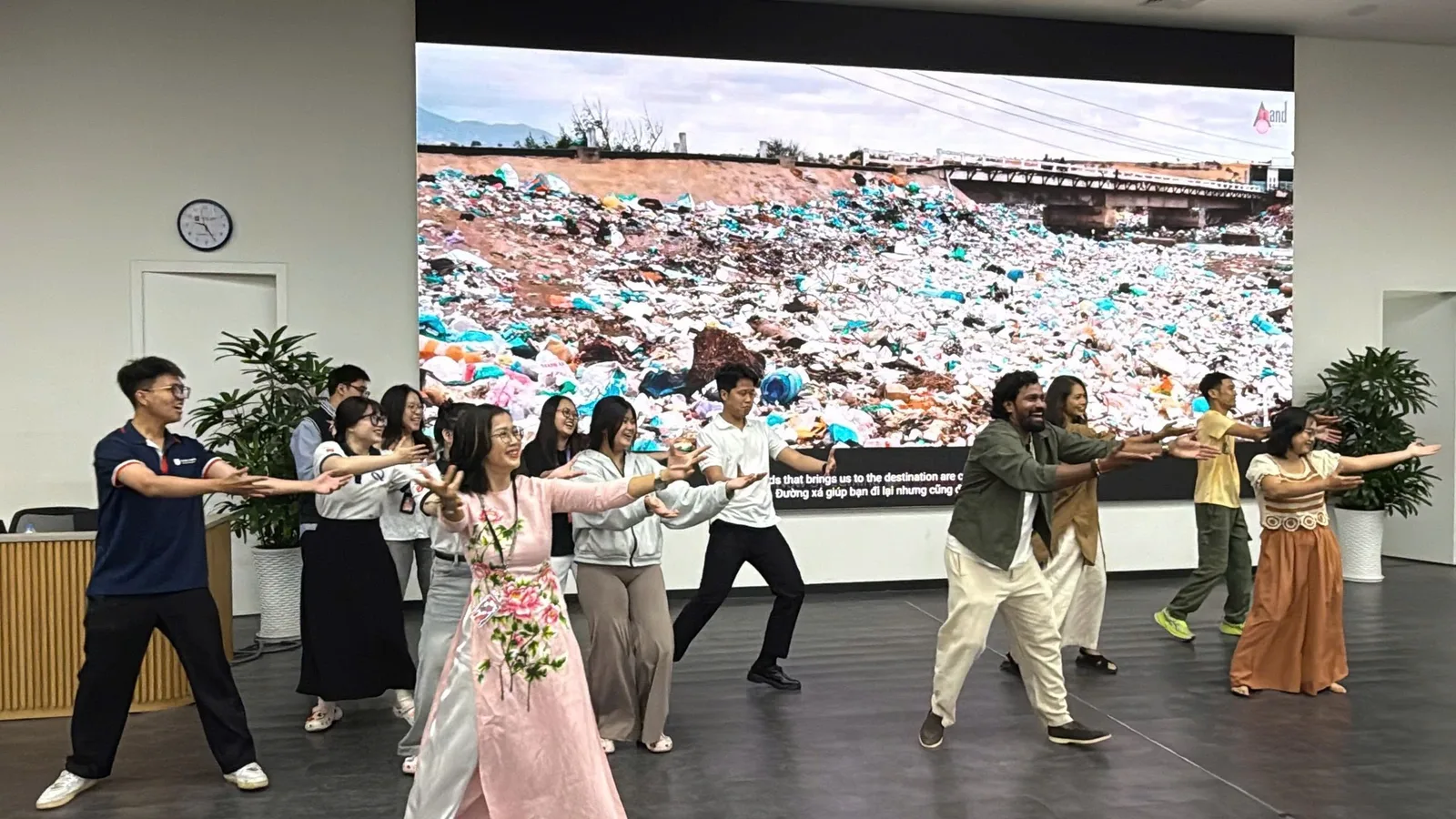
At first, some students felt hesitant and unfamiliar with the approach and practices, which differed from their usual learning experiences. Gradually, however, they became more open, immersed themselves in the flow of the session, and directly experienced practices for observing themselves and reconnecting with their breath.
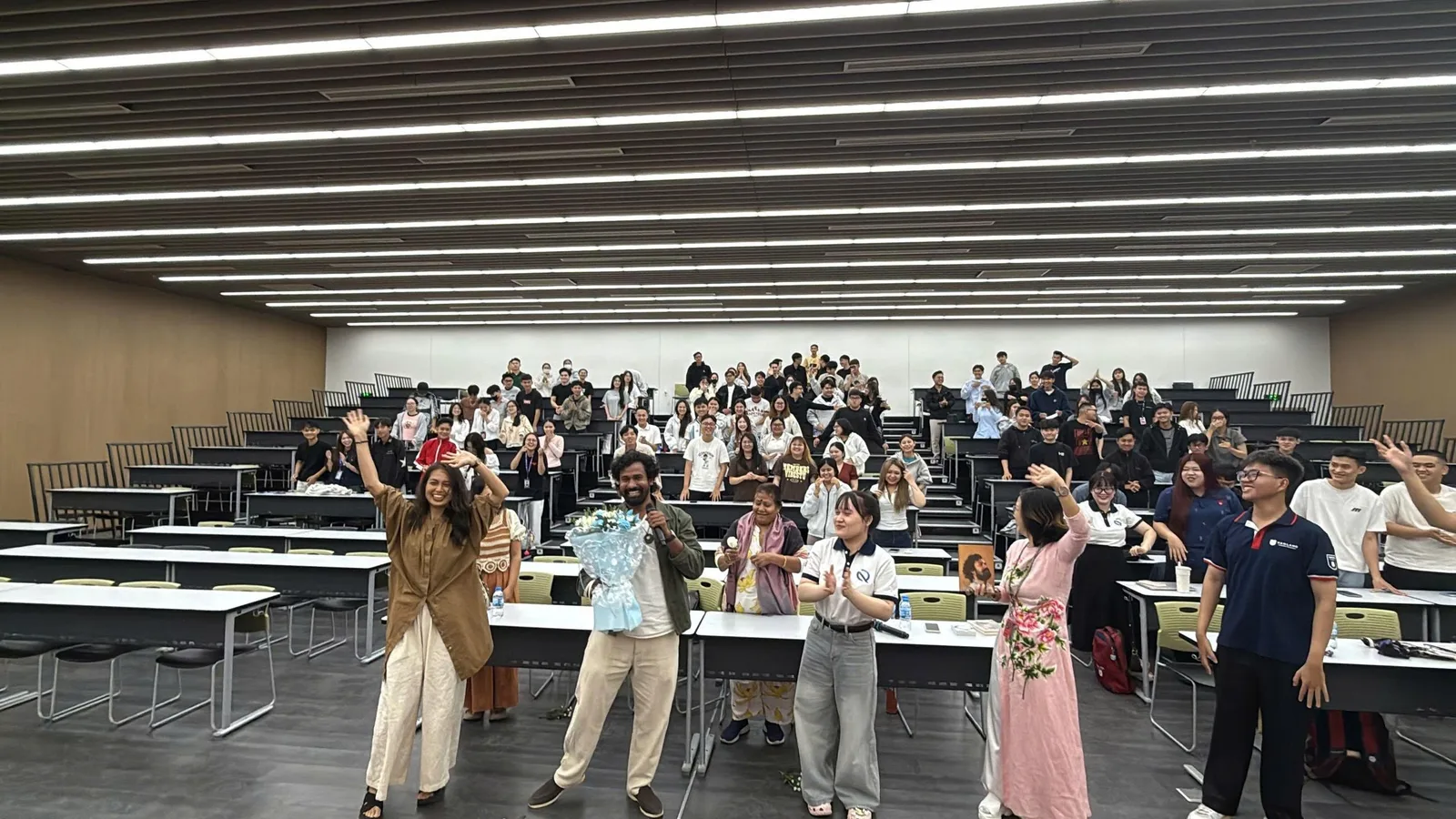
For Phuc An, the session brought a deep sense of gratitude for the opportunity to receive such fresh and profound lessons from Master Oneness. This reflection also highlighted the value of creating a learning environment that goes beyond acquiring knowledge, allowing each person to see themselves from new perspectives.
Perhaps the value of a learning experience lies not only in how much information we remember, but also in the questions we continue to carry with us after the session ends.
Am I living and acting from awareness, or from unconscious habits? How am I using my energy? And what kind of value do I want to create as a leader for my community?
✿ Continuing the Journey of Nurturing Conscious Leaders
Master Oneness's third visit to Van Lang University further strengthened the connection between education, human development, and the practice of awareness.
In a constantly changing world, professional competence remains essential. Yet the ability to recognize ourselves, regulate our reactions, collaborate with others, and remain committed to the values we choose are equally important foundations to cultivate.
Ultimately, a leader is defined not only by what they achieve, but also by the quality of their presence, the value they create, and the way they contribute to the growth of those around them.
And this journey can begin with the simplest things: a breath consciously noticed, a reaction mindfully observed, a habit transformed, and a choice made with awareness.
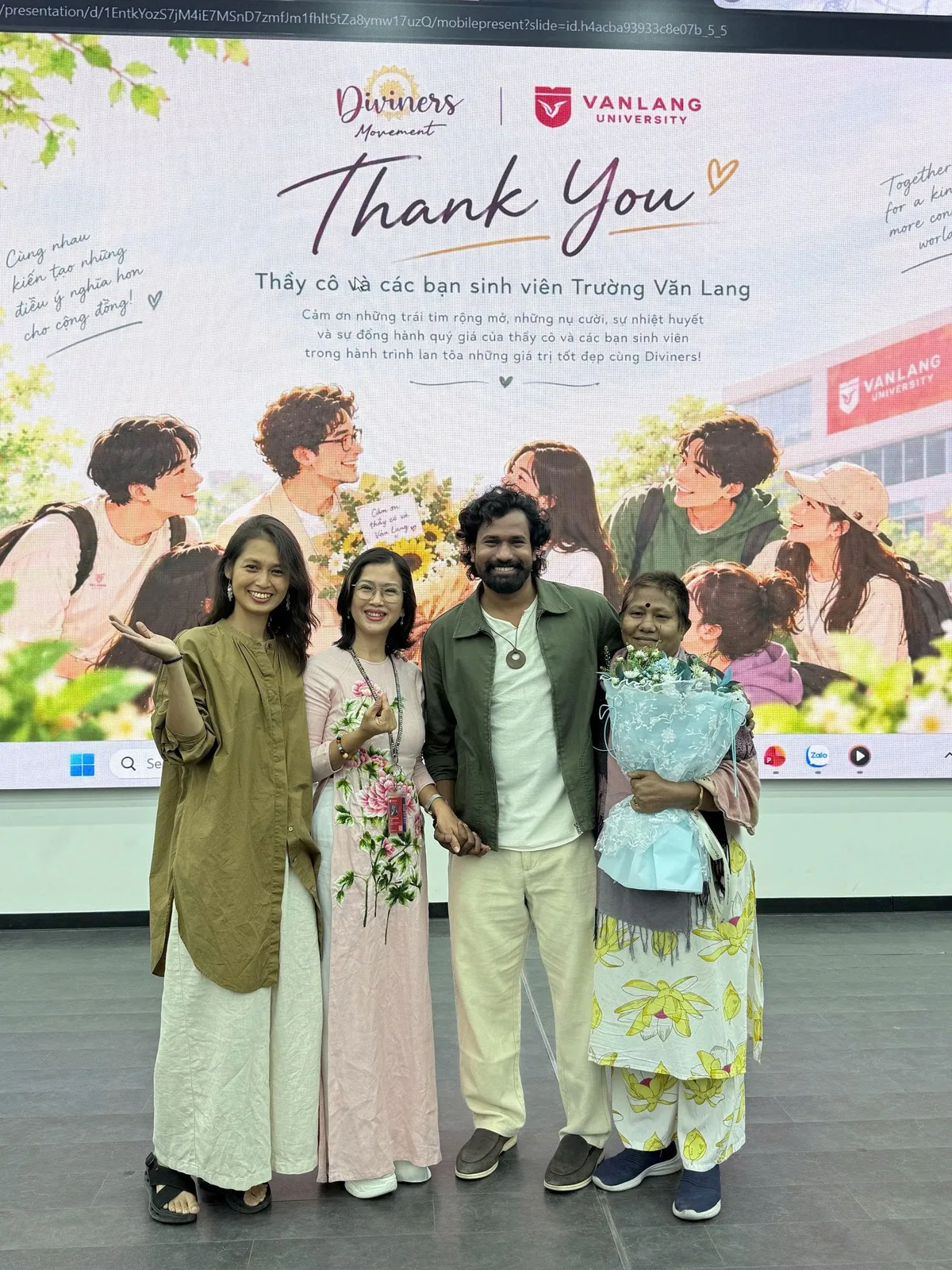
Diviners extends its heartfelt gratitude to Van Lang University, the faculty, and all 150 students for co-creating this meaningful space for learning, practice, and connection.
Namaste 🙏